




AlphaNa Bioscience Advances Programmable mRNA Delivery Through Quantitative Nanoparticle Design
AlphaNa Bioscience and its founder, Professor Yucai Wang, and colleagues have published a research article in the Journal of the American Chemical Society (JACS), reporting a data-driven strategy for designing mRNA delivery systems with organ-selective targeting capabilities.
The study introduces a polymer–lipid integrated nanoparticle (PLIN) platform that combines modular nanoparticle engineering with quantitative modeling approaches, providing a predictive framework for developing next-generation RNA deliery technologies.
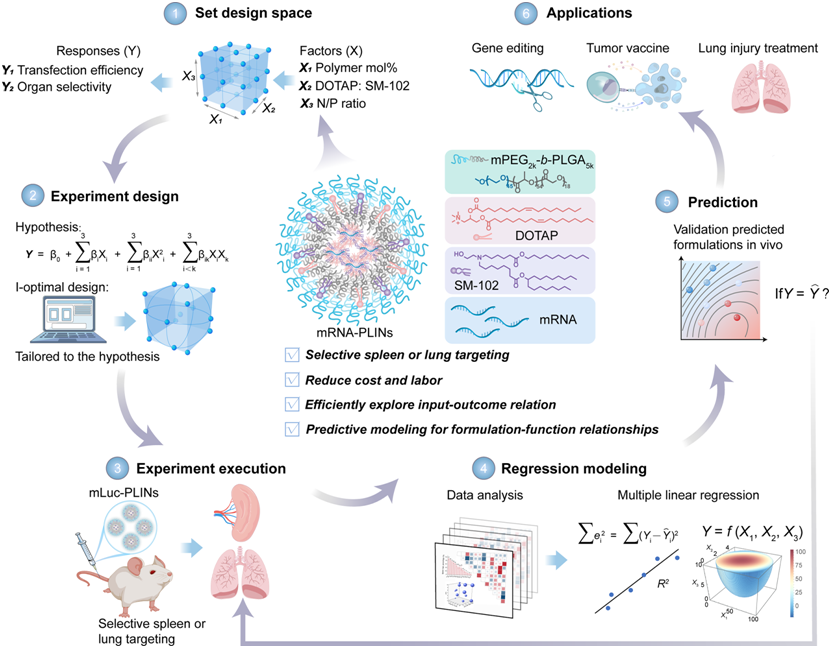
Figure 1. Data-driven design framework for organ-selective mRNA delivery using the PLIN platform.
Addressing a Key Challenge in mRNA Therapeutics: Precision Delivery
The rapid advancement of mRNA medicines has highlighted the critical importance of delivery technologies. While current lipid nanoparticle (LNP) systems have enabled major breakthroughs, their predominant accumulation in the liver remains a challenge for applications requiring delivery to other organs.
Achieving predictable and programmable delivery of mRNA therapeutics beyond the liver represents a major opportunity for expanding RNA medicine into new therapeutic areas.
A Predictive Framework for Organ-Selective mRNA Delivery
In this study, the research team developed PLIN, a modular polymer–lipid integrated nanoparticle platform that expands the design space for mRNA delivery systems. By combining design-of-experiment approaches with quantitative modeling, the platform enables prediction of relationships between nanoparticle composition and in vivo organ distribution.
Using this approach, the team generated nanoparticles with high organ-selective delivery performance, including up to 91% lung targeting and 96% spleen targeting in preclinical studies. The study further identified nanoparticle-associated protein corona characteristics as an important factor influencing organ-selective delivery behavior.
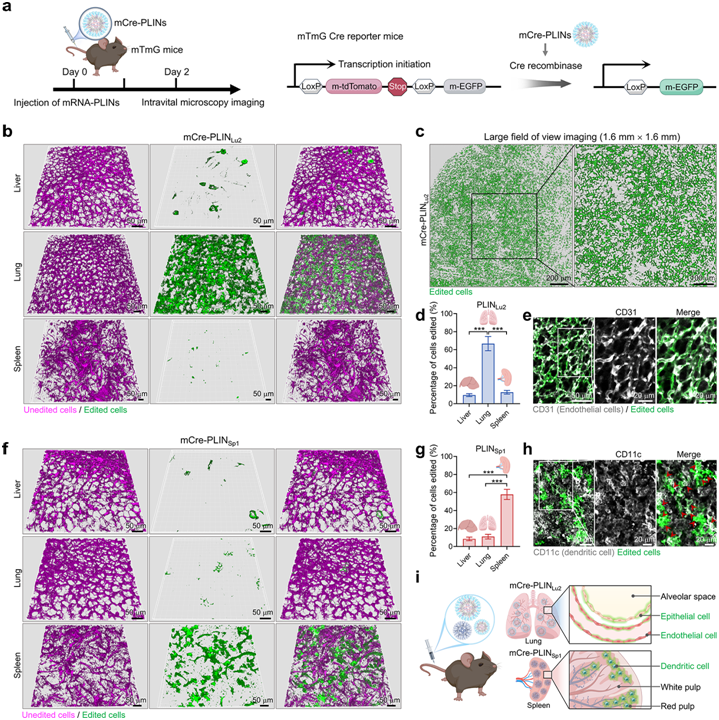
Figure 2. Organ-selective PLIN nanoparticles enable functional mRNA delivery across distinct tissues,
expanding the potential applications of RNA therapeutics.
Expanding Applications of RNA Therapeutics
The study demonstrated the potential of organ-selective PLIN systems in multiple mRNA applications, including organ-specific gene editing, lung-related therapeutic applications, and immune modulation.
Compared with ligand-modified targeting strategies that require additional biological targeting molecules, the PLIN platform achieves organ-selective delivery through rational nanoparticle composition design, offering potential advantages in manufacturing simplicity and translational scalability.
Executive Comment
“Precision delivery remains one of the most important challenges for the next generation of RNA medicines,” said Yucai Wang, Founder of AlphaNa Bioscience. “This work establishes a quantitative design framework for engineering delivery systems and supports our broader vision of developing programmable RNA technologies for vaccines, immune engineering, cancer therapeutics, and genetic medicines.”